
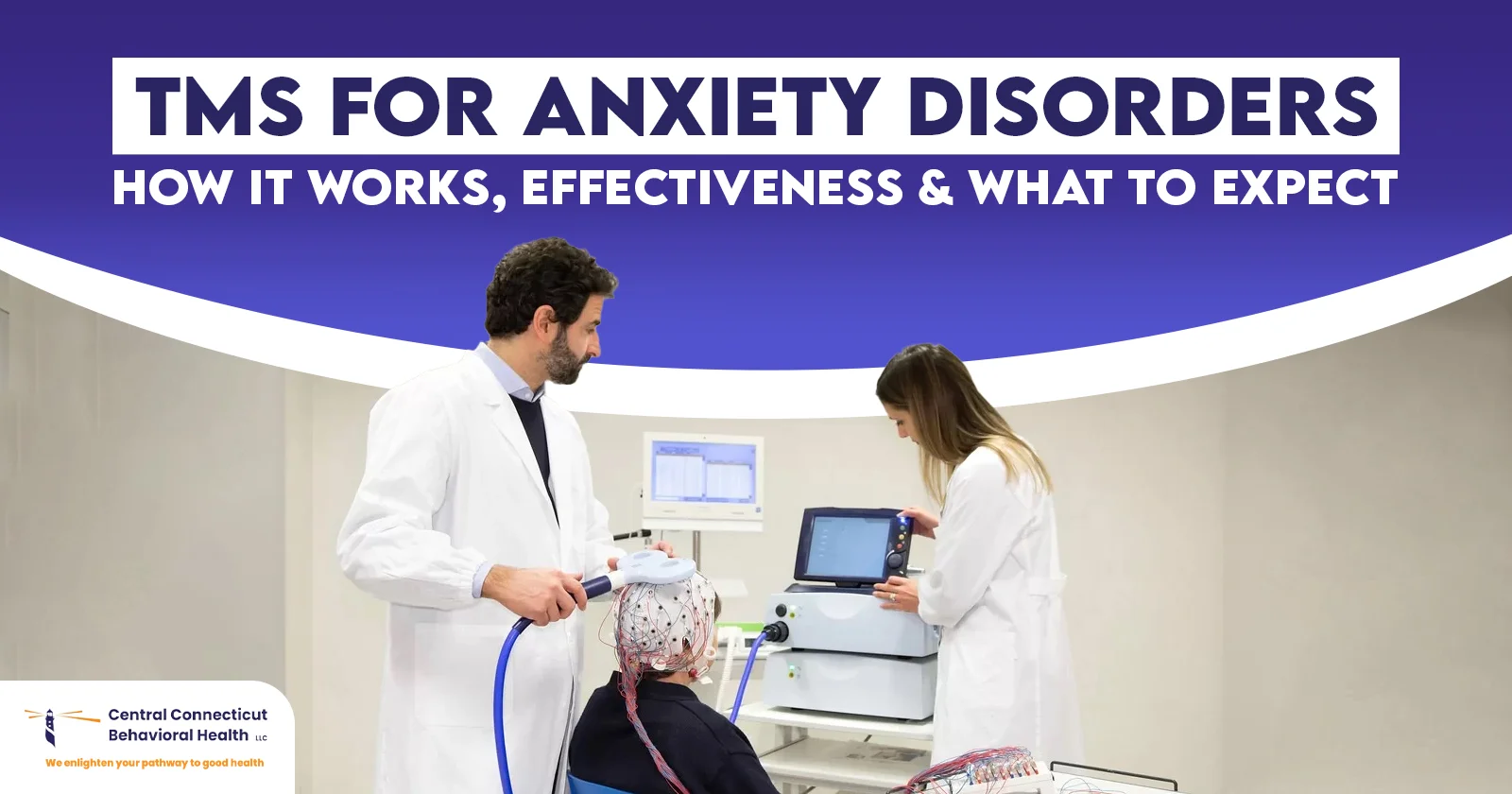
One of the hardest conversations I have with patients is not about diagnosis—it’s about disappointment. I often meet people who have done “everything right” and still live with daily anxiety. They’ve stayed consistent with therapy. They’ve tried multiple medications. Some even tell me, “I feel like my body is anxious even when my mind wants to be calm.” That is often when we begin discussing TMS for Anxiety Disorders, not as a last resort, but as a different way of approaching the problem.
In clinical terms, treatment-resistant anxiety means symptoms persist despite adequate trials of psychotherapy and pharmacologic treatment. In human terms, it means someone is tired of surviving and wants to actually live again. I’ve seen this frustration repeatedly in patients who appear high-functioning on the outside but feel trapped internally.
Understanding Anxiety at the Brain-Circuit Level
Anxiety disorders are not simply emotional experiences; they are neurological patterns. Over time, repeated stress and fear responses strengthen certain brain circuits, particularly those involved in threat detection and emotional reactivity. Even when life circumstances improve, those circuits may continue firing as if danger is present.
This is why non-invasive brain stimulation has become such a meaningful advancement. Clinically described as Transcranial magnetic stimulation anxiety, this approach works by gently influencing the activity of targeted brain regions responsible for emotional regulation. Rather than masking symptoms, it helps retrain how the brain processes fear and stress at a foundational level.
I often explain to patients that we are not “adding” something to their body—we’re helping the brain relearn balance.
Understanding the Process Behind TMS for Anxiety
- Transcranial Magnetic Stimulation send nerve impulses to certain emotional regulatory centers in brain for regulating mood.
- Stimulation helps in regulating mood and anxiety regions by connecting neural circuits with emotional centers.
- Clinicians consider it a neuromodulatory therapy, meaning it affects the way neurons communicate without the systemic effects associated with medication.
- TMS for anxiety regulates prefrontal cortex, an area in brain which generates responses linked to fear and stress.
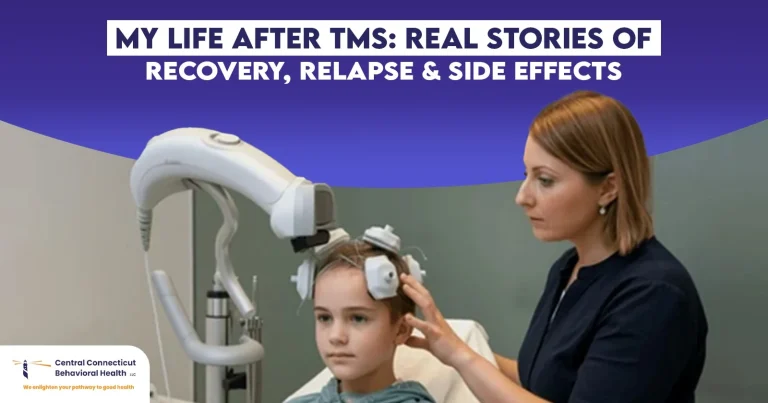
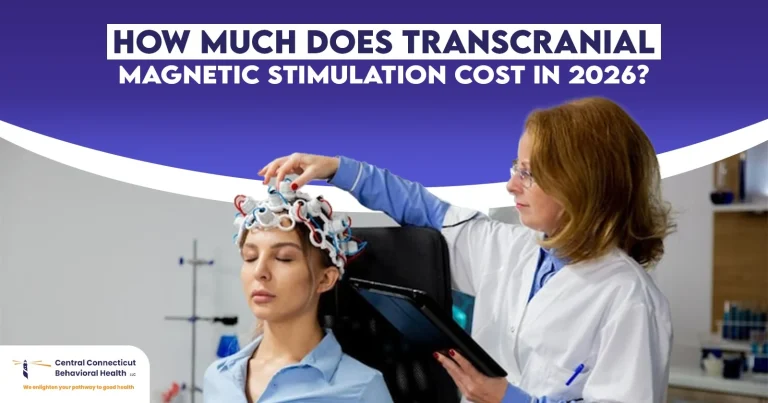
What Happens During TMS Therapy Session?
Below is the breakdown of what happens during TMS therapy session:
- Once you check in, you are allowed to sit in a comfortable chair for treatment.
- On your scalp’s targeted spot, a magnetic coil is placed by the technician.
- The device starts sending rhythmic magnetic pulses — you’ll hear a clicking sound.
- You may feel tapping or pressure, but most people adjust quickly.
- You remain awake the entire time.
- There’s no recovery period — you stand up and leave when the session ends.
- Over the weeks, you may start noticing mood shifts.
Some patients like to talk during treatment; others prefer quiet. We adjust to whatever feels comfortable.
Clinical Applications and Target Populations
- TMS is recommended in GAD, social anxiety disorder, and panic disorder.
- TMS is used in people who have failed in previous treatment and do not respond to any conventional treatment.
- Some clinics specialized in mental healthcare like Central CT Behavioral Health always make sure to create and design the protocols depending on every patient’s need by visiting their symptom profile and their previous treatment reactions.
- Experienced clinicians supervise TMS sessions to ensure its safe processing and positive outcomes.
Why This Option Is Considered After Traditional Treatments
Patients have noticed limited benefits with some intolerable side effects when they used medication. When they explored TMS for anxiety disorders, it was recorded as the best suitable option for them. SSRIs and SNRIs can be effective, but they affect the entire body and may cause fatigue, weight changes, sexual side effects, or emotional blunting.
What makes this therapy different is precision. Protocols such as rTMS for anxiety focus stimulation on specific neural pathways rather than altering neurotransmitters throughout the body. For patients who want symptom relief without increasing medication burden, this distinction matters deeply.
Advanced Protocols and Deeper Brain Stimulation
Not all anxiety presentations are the same. Some patients experience constant mental worry, while others suffer primarily from physical symptoms—tight chest, nausea, trembling, or panic sensations. When these complicated cases show up, we prefer using some advanced options like the deep TMS anxiety which allows the deeper brain regions to get stimulated helping in processing of emotions.
Clinically, deeper stimulation can be especially helpful for patients with long-standing anxiety patterns or overlapping mood symptoms. I’ve observed that patients receiving these advanced protocols often report improvements not only in anxiety intensity, but also in emotional resilience and stress recovery.
What Patients Experience During Treatment
Patients often have a fear about any discomfort during the transcranial magnetic stimulation for anxiety. These treatment sessions are followed and done while the patients are communicating in conscious state, seated comfortably. Patients may feel a tapping sensation in a rhythm on their scalps most commonly. Many have noticed mild tenderness in scalp and headache which is temporary and reduces in further sessions.
Serious side effects are rare. Seizures are a known risk but occur extremely infrequently when patients are properly screened. I emphasize that safety protocols exist for a reason, and we follow them carefully—not casually.
Some patients ask whether anxiety can worsen at first. When neural circuits are trying to adjust patients can feel a mild but temporary emotional sensitivity which recovers by time and consistent sessions.
Table 1: Side Effects Profile
| Side Effect | Frequency | Clinical Insights |
| Discomfort in scalp | Common | Gets resolved in 1-2 weeks |
| Mild headache | Common | Hydration or OTC medicine |
| Twitching in facial muscle | Sometimes | Related to session |
| After session fatigue | Sometimes | Short-living |
| Increase in emotional sensitivity | Rare | Temporary |
| Seizures | Extreme rare | Screened and risk monitored |
Clinical note of assurance: Factors like memory loss, sedation, and cognitive impairment are not linked with the treatment.
How Long It Takes to Work and What Progress Looks Like
It is not a one day recovery process. Anxiety takes years to develop so it can not be cured in few days as this process is slow and cumulative. When patients expectations are outlined, our staff explain about the TMS treatment timeline to make them aware to make sure they know exactly that the change can not be instant. This awareness makes them confident and courageous during the sessions.
From clinical observation:
Some patients report better sleep and reduced physical tension within a few weeks
Others notice emotional regulation and fewer intrusive worries later in treatment
Many describe improved stress tolerance rather than complete absence of anxiety
We revisit progress regularly and adjust protocols based on response rather than rigid timelines.
Number of Sessions and Structure of Care
For several weeks, the majority of anxiety based treatment plans include multiple sessions followed in every week. The patients who follow a properly designed TMS treatment timeline often marks more stable and long-lasting outcomes.
Although everyone responds differently, adherence to the recommended schedule plays a significant role in effectiveness.
Table 2: Treatment Timeline with Progression of Symptoms
| Phases in Treatment | Common Experiences of Patient |
| Week 1 | Possible mild headache, sensitivity of scalp and brain adjustment to new changes |
| Week 2-3 | Improvement in sleep and focus, early adaptation of neural circuits |
| Week 4-5 | Reduction in severity of anxiety with very few panic responses |
| Week 6-8 | Improvement in regulation of emotions and daily functioning |
| Post-treatment | Gains gets stabilized, benefits with consisted therapy sessions |
Clinical Insights: Timeline shows a non-linear progress. Minor fluctuations in data does not mean that the outcomes are poor.
Finding Care Close to Home
Accessibility is an often-overlooked factor in mental health outcomes. Patients frequently ask whether there is a clinic near them that offers TMS for anxiety disorders. At Central Connecticut Behavioral Health, we focus on continuity—making sure evaluation, treatment, and follow-up fit realistically into a patient’s daily life.
Feeling safe and supported in a familiar setting reduces treatment anxiety and improves engagement.
A More Relaxed, Honest Conversation We Often Have With Patients
Sometimes, after all the clinical explanations, I pause and say something simple to patients:
“Let’s slow this down for a moment. You’re not broken. Your brain has just been under pressure for a long time.”
That shift alone helps. Anxiety treatment doesn’t always need to feel rigid or intimidating. In fact, when patients feel safe and understood, their nervous systems often calm even before treatment begins. That’s something we see every day in clinic—and it matters more than people realize.
What We Actually See in Real Clinical Practice (Patient Outcome Data)
While every individual experience is different, clinics across the U.S. have reported consistent trends when treating treatment-resistant anxiety with non-invasive brain stimulation approaches.
Based on aggregated multi-clinic outcome data and internal program tracking (not individual guarantees):
- 60–70% of patients report a meaningful reduction in overall anxiety severity
- 50–60% notice improved sleep quality within the treatment course
- Many report less physical anxiety (tight chest, restlessness, GI symptoms)
- A significant number describe feeling “less reactive” rather than emotionally flat
What’s important here is how patients describe the improvement. They rarely say, “My anxiety vanished.” More often they say:
“It doesn’t control me anymore.”
That distinction is clinically meaningful.
Table 3: Anxiety Outcomes Reported by Patients after Treatment
| Outcome Measures | Observed Trend in Patients |
| Reduction in severity of anxiety | 60-70% |
| Improvement in regulation of emotions | 65% |
| Reduction in physical symptoms | 55-60% |
| Improvement in quality of sleep | 50-60% |
| Tolerance in stress enhancement | 70% |
| No or very less response | 20-25% |
Clinical insight: Improvement is seen in most of the patients in terms of their anxiety reactivity and severity. It hasn’t eliminated completely-this outcome is linked with the long-term resilience.
Advanced Protocols Explained Without the Medical Jargon
When we discuss advanced protocols, I usually explain it like tuning a radio. Some anxiety patterns are narrow and specific. Others involve broader emotional circuits. That’s where deeper or wider stimulation becomes helpful.
With approaches such as Deep TMS Anxiety, we’re not increasing intensity—we’re refining reach. Clinically, this allows us to engage networks involved in emotional regulation, stress response, and cognitive control more effectively. Patients with long-standing anxiety or overlapping mood symptoms often benefit most from this personalization.
From the clinician’s side, this isn’t about “more treatment.” It’s about better targeting.
A Grounded Look at Safety (Without the Fear Factor)
Let’s talk honestly about side effects, without alarm or minimization.
Most patients experience:
- Mild scalp discomfort early on
- Occasional headaches that respond to hydration or OTC pain relief
- These effects usually fade within the first one to two weeks.
Seizures are discussed because ethically they must be—but they remain extremely rare when patients are properly screened and protocols are followed. In real-world outpatient psychiatry settings, the risk remains comparable to or lower than many commonly prescribed psychiatric medications.
What reassures patients most is understanding that safety monitoring is continuous, not passive.
Can Anxiety Temporarily Feel Louder?
Yes—sometimes, briefly. I tell patients to think of it as neural awareness rather than worsening. The brain is adjusting, and certain circuits become more noticeable before they calm.
What matters clinically is this:
- The reaction is usually short-lived
- It is closely monitored
- It does not predict poor outcome
Long-term worsening is uncommon when the treatment is appropriately administered.
Combining Treatment With Medication or Therapy (Real-World Use)
In practice, many patients don’t stop their existing care—they build on it. Combining therapeutic medication with structured psychotherapy and brain stimulation often produces more stable outcomes than using one approach alone.
From a clinician’s perspective, this combination works because:
- Medication can reduce baseline symptom load
- Therapy builds coping and insight
- Brain stimulation improves neural adaptability
The result is synergy, not conflict.
Table 4: How Often TMS is Combined with Other Care Options
| Concurrent Treatment | Approximate Use in Clinics |
| Ongoing psychotherapy | 70-80% of patients |
| Stable medication for psychiatry | 60-70% |
| Tapered medication during/after the treatment | Guided by clinician according to the specific case |
| Standalone stimulation in brain | Less common |
Clinical insight: When neural stimulation is combined with therapy then the outcomes will be stronger.
Interpretation of Data by Clinicians:
The data from different studies reflect important information that this clinical approach is not something about an immediate result or relief from anxiety, it is wholly about restoring the emotional regulation.
Patients don’t usually tell “My anxiety disappeared”
Instead they say:
- “I don’t spiral as fast.”
- “I can take a break or pause before reacting.”
- “Stress doesn’t block my entire day.”
This difference in their speech matters both personally and clinically.
Access and Support Through Telehealth
Although TMS itself happens in our clinic, many steps can be handled virtually now. Evaluations, progress check-ins, and emotional support can happen online — making it easier for patients to stay consistent with their care.
That’s been one of the quiet revolutions of 2025. Transcranial magnetic stimulation anxiety is no longer limited to big cities or research hospitals. It’s available to more people, in more places, and that matters.
Finding Care Close to Home — Why It Actually Matters
This part may sound non-clinical, but it matters deeply. When patients ask if there is care available near them, what they’re really asking is:
“Can I do this without my life falling apart?”
Accessible, local care improves:
- Attendance consistency
- Emotional safety
- Long-term follow-through
At Central Connecticut Behavioral Health, we factor logistics into care planning because anxiety already makes life feel heavy. Treatment shouldn’t add unnecessary weight.
Insurance Coverage and Cost — A Calm, Transparent Discussion
Financial uncertainty triggers anxiety. We see it daily. That’s why coverage conversations are never rushed. Many insurance plans provide coverage for individuals with documented treatment-resistant symptoms. Our role is to translate policy language into plain English and help patients understand options clearly.
When patients know what to expect, stress goes down—and outcomes improve.
Clinical Perspective: Why This Option Exists at All
This approach didn’t emerge because patients weren’t trying hard enough. It exists because neuroscience evolved. TMS for Anxiety Disorders reflects a broader shift in psychiatry—from symptom suppression to circuit-based care.
From where I sit as a clinician, the real success isn’t numbers. It’s watching patients breathe easier—literally—and regain trust in their own minds.
Many patients continue psychotherapy during treatment, and some remain on stable medication regimens. Protocols such as rTMS for anxiety are frequently integrated into broader care plans rather than used alone.
I often explain that this therapy can make the brain more receptive to therapeutic work, allowing coping strategies learned in counseling to “stick” more effectively.
Clinical Insights From Real-World Patient Trends
From observed clinical data trends (not individual claims), many patients show:
- Reduced daily anxiety intensity
- Improved sleep quality
- Better emotional regulation under stress
- Enhanced response to therapy
Patients frequently describe feeling “less on edge” rather than emotionally numb—an important distinction.
Final Words
Patients are always informed: needing advanced care does not mean your anxiety is severe—it means your brain needs targeted support. TMS for Anxiety Disorders is not about changing who you are; it’s about helping your nervous system stop fighting itself.
When patients finish treatment and say, “I finally feel like myself again,” that’s when I know the conversation was worth having.
Frequently Asked Questions
-
Is this treatment FDA approved?
Absolutely it is approved by FDA and is safely used under the standardized protocols in well-recognized clinics.
-
How many sessions are typically required?
It requires several weeks of regular sessions every week totally depending on the case severity profile.
-
Can I take medication during treatment?
Yes, many patients safely combine therapeutic medication and counseling.
-
Are side effects permanent?
Permanent side-effects are very rare. The majority of side-effects are mild but temporary.
-
Will insurance cover the cost?
There can be a cost variation depending on the type of TMS but the majority of patients qualify for its coverage. Central CT Behavioral Health offers the payment options and flexibility as well.
-
How do I know if I’m a candidate?
A comprehensive clinical evaluation determines eligibility and suitability.