
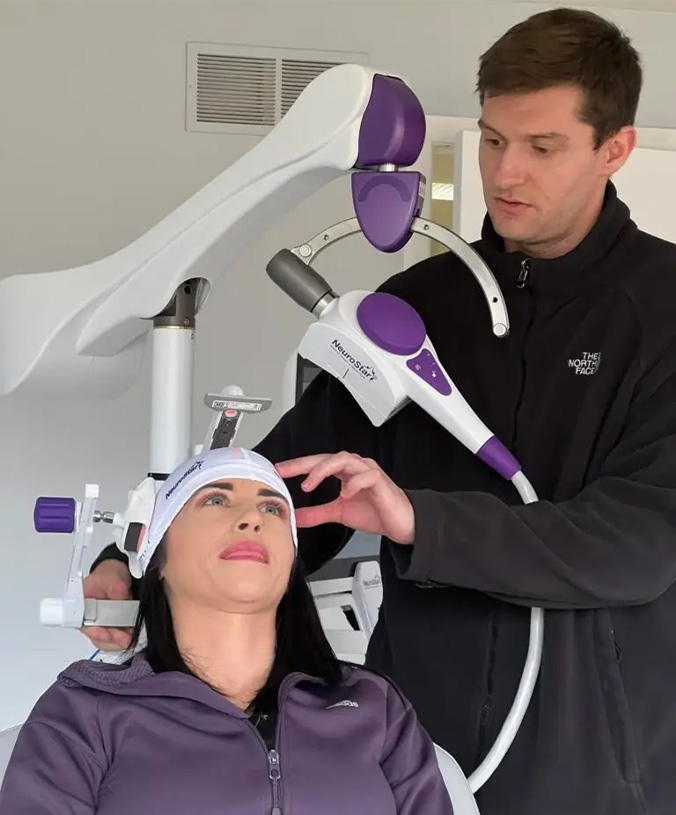
Transcranial magnetic stimulation (TMS) is a noninvasive, office-based treatment that uses focused magnetic pulses to stimulate brain regions involved in mood regulation. It may be considered after a clinical evaluation.
How TMS works
During treatment, a clinician positions a magnetic coil near the scalp. The device delivers repeated magnetic pulses to a selected area of the brain. TMS is noninvasive: there is no incision, and treatment does not circulate through the body in the way a medication does.
What to expect
Patients remain awake during an office visit while trained staff operate the device and monitor comfort. TMS is usually delivered as a series of scheduled sessions rather than as a single treatment. The exact length, frequency, and number of sessions depend on the clinical plan, the protocol, response, and coverage requirements.
Evaluation and individualized planning
Before treatment, the practice reviews current symptoms, treatment history, medications, medical conditions, implanted devices or metal, and other safety considerations. The clinician discusses realistic goals, possible discomfort or adverse effects, alternative treatments, and how progress will be assessed.
Protocols and availability
The legacy CCBH page describes standard TMS, deep TMS, theta-burst, accelerated, and maintenance approaches. These names describe different protocols or treatment schedules, but they should not be read as a promise that every option is currently offered or appropriate for every condition. Contact the office to confirm the current device, protocol, location, candidacy process, and insurance requirements.
What care may include
- Review of symptoms, diagnoses, prior treatment, medications, medical factors, and safety considerations
- Discussion of why TMS may or may not be appropriate
- Explanation of the proposed protocol, schedule, expected benefits, limitations, risks, and alternatives
- Individualized positioning and treatment settings
- Awake, office-based sessions without anesthesia or systemic medication administration
- Staff monitoring and regular review of symptoms and functioning
- Coordination with medication management, psychotherapy, and other psychiatric care when appropriate
Care begins with an individualized assessment. Availability, clinical fit, age ranges, location, telehealth eligibility, and treatment recommendations vary by provider. Contact the office to confirm current options.