

Social anxiety disorder can create barriers in a person’s life, hindering personal and professional development and creating limitations on social connections. Therefore, it is important to provide an effective method of treating this type of anxiety.
TMS for social anxiety has been found to be an effective treatment, using targeted magnetic pulses to stimulate areas of the brain responsible for regulating mood and anxiety.
TMS is a non-invasive procedure, uses a targeted approach, and is clinically validated and proven to be effective.
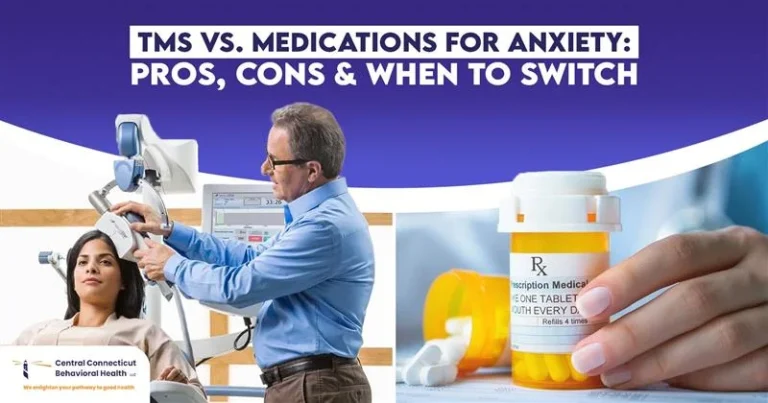
There are also other treatment options for social anxiety disorder, such as medication and psychotherapy; however, medication has known side effects and psychotherapy can take months before an individual will feel any benefit from them.
At Central Connecticut Behavioral Health, patients receive an individualized assessment,
expert oversight from a treatment provider, and continuous monitoring throughout treatment to ensure the best possible outcome.
Understanding Social Anxiety Disorder
Social Anxiety Disorder (SAD) is a severe fear of social interaction with symptoms including:
- A tendency to avoid social events.
- An overactive concern (excessive worry) regarding how they will be judged by others.
- Physical Signs such as trembling, sweating, or rapid heart rate.
If not treated effectively, SAD will have an impact on your education, employment, and relationships.
CBT (Cognitive Behavior Therapy) and medication have both been recognized as the two main types of treatment for SAD; however, due to either the limited efficacy of treatments or the potential side effects of CBT and/or Medication, some people look for alternative treatments.
TMS for Social Anxiety Disorder targets the circuitry in the Brain that is associated with Fear and Anxiety.
What is TMS and How It Works
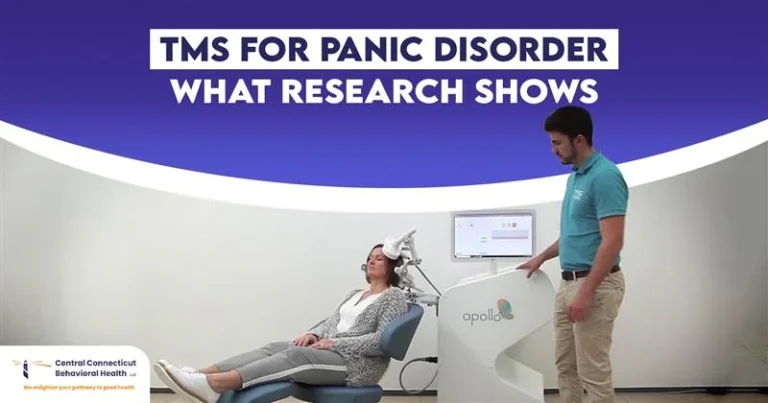
TMS for social anxiety is used to treat social anxiety disorder that involves applying
electromagnetic stimulation directly to the brain.
The primary target of this type of treatment is usually located in the prefrontal cortex of the brain, which regulates a person’s behaviors when interacting with others as well as their mood.
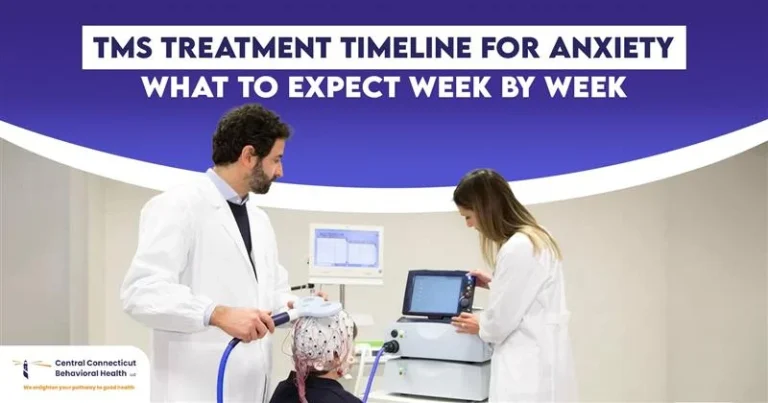
TMS is achieved by the following three steps:
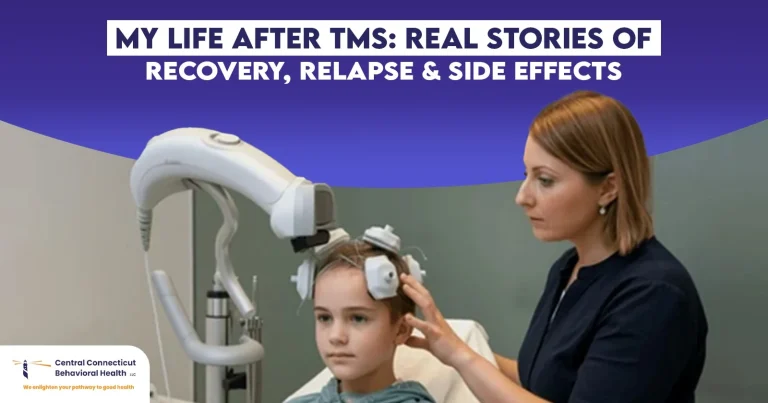
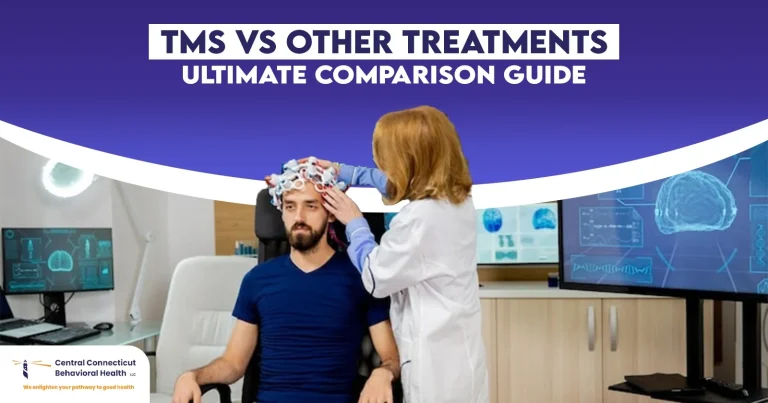
- Magnetic coils are placed non-invasively on a patient’s scalp
- Brief magnetic pulses are sent into the brain
- The resulting increase in activity between neurons and connection between brain areas improves communication.
Due to its non-invasive nature, TMS can change how people with social anxiety experience their neural pathways that cause them extreme anxiety over social situations.
Benefits of TMS for Social Anxiety
Patients suffering from Social Anxiety Disorder (SAD) who receive Transcranial Magnetic
Stimulation (TMS) can expect to experience the following benefits:
- A decrease in anxiety-related symptoms
- A boost in their self-confidence when faced with social situations
- An increase in their ability to handle emotional stressors
- Less risk of side effects in comparison to medications.
A structured treatment plan at Central Connecticut Behavioral Health ensures that patients are monitored regularly, optimizing results and maintaining safety.
Who Can Benefit from TMS
Transcranial Magnetic Stimulation is appropriate for those who:
- Have failed to respond well with medication treatments
- Prefer non-invasive types of treatment
- Have a negative response to medication treatments
- Want rapid results in conjunction with psychotherapy
Central Connecticut Behavioral Health is an example of a facility that works with patients experiencing Social Anxiety Disorder and are looking for TMS for social anxiety near me.
Costs and Accessibility
Planning for treatment requires an understanding of cost.
- How much does TMS for social anxiety cost in USA varies by clinic across the United States.
- Certain insurance plans can help with some of the cost associated with treatment.
- Patients will often be offered financial counseling in order to develop an individualized plan.
Types of TMS for Social Anxiety Treatments
- Standard TMS (Transcranial Magnetic Stimulation) refers to a protocol widely accepted as an effective treatment for Social Anxiety Disorder (SAD) in which a patient receives repetitive stimulation to certain areas of the brain
- Deep TMS for social anxiety penetrates more deeply into the brain than standard TMS. In doing so, it has the potential to yield superior results in patients suffering from significantly more severe symptoms.
- rTMS social anxiety research indicates that rTMS can increase cognitive flexibility, decrease avoidance behaviors exhibited by patients as part of their anxiety disorder, and improve a patient’s social confidence.
Conclusion
TMS for social anxiety provides relief to people affected by ongoing fear of social contact by providing a medical treatment that is recognized by the scientific community as valid and effective without requiring surgery or medication.
When TMS is combined with lifestyle modification or cognitive behavioral techniques, it can be a great source of assistance for anyone looking for a fresh start in life.
Central Connecticut Behavioral Health provides support to its patients at each point in their treatment, with compassion, skill, and clinical knowledge.
FAQs
Can TMS Help My Social Anxiety?
Yes, TMS has been shown by many studies to help reduce the symptoms of social anxiety and increase social confidence in patients with social anxiety.
How long will it take to see results?
Most patients will start to notice some improvement after approximately 2–4 weeks of receiving consistent TMS treatment.
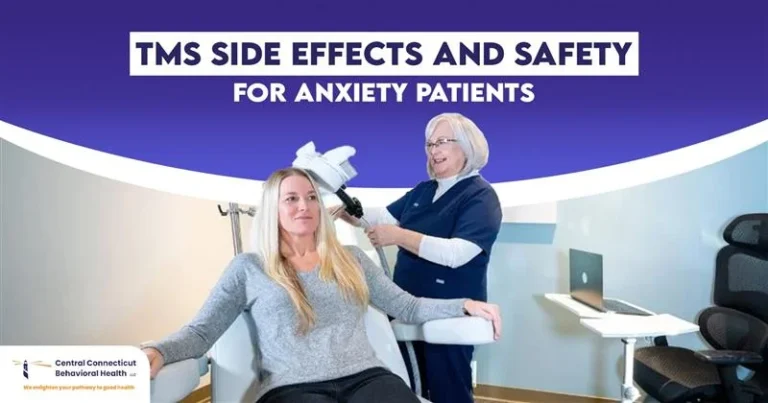
Are there any side effects from TMS Therapy?
Some people may experience mild headaches or tenderness on their scalp following the procedure; however, serious side effects are very uncommon.
Is TMS Therapy Safe for Everyone?
TMS therapy is considered to be safe and non-invasive for most healthy adults, but your medical professional must evaluate your health history to determine whether you are a candidate.