
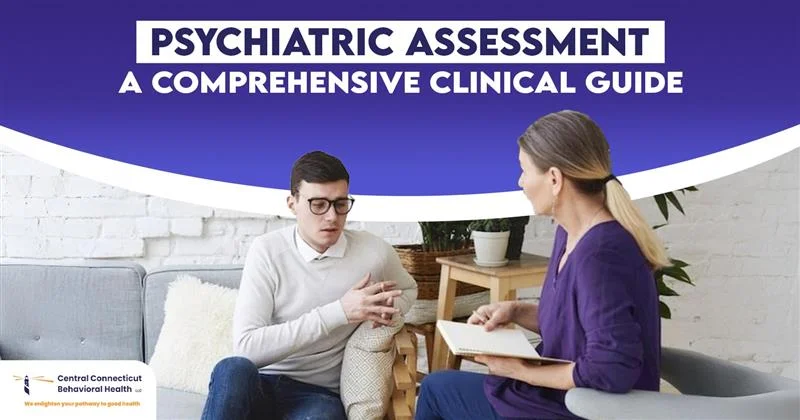
We often notice that when someone walks into Central Connecticut Behavioral Health, they carry more than a symptom. It’s rarely just insomnia or low mood, though that’s what they often say at first. And honestly, that’s okay — because those surface issues usually hide a web of experiences, patterns, stressors, and sometimes traumas that have been quietly shaping them for years. A Psychiatric Assessment isn’t about ticking boxes; it’s about untangling that web, piece by piece, and sometimes it’s messy, and sometimes it’s slow, but that’s the point.
Sometimes people are surprised at how much time we take just listening. We might sit in silence for a moment, letting them think aloud, noticing their gestures, the pause in their voice, or the little sighs they don’t even realize they’re making. That’s not wasted time. In fact, those pauses — those half-words, that hesitation — they tell us more than a perfectly rehearsed answer ever could. It’s funny, but people often realize things about themselves in that silence, things they hadn’t said out loud even to themselves.
We also think about context before conclusions. A patient may describe irritability or fatigue, but when we ask about their work, family, daily routines, and long-term stress, the picture shifts. Sometimes someone comes in worried about mood swings, and we discover that caregiving responsibilities or financial stressors are the main drivers. That’s why this assessment isn’t a one-shot procedure; it’s a narrative — a story we explore together, one detail at a time.
The Art of Listening
Listening isn’t just hearing words; it’s noticing tone, rhythm, repetition, pauses, and even the things left unsaid. We often remind ourselves that a patient’s hesitations or contradictions aren’t obstacles; they’re clues. Someone might smile when talking about a stressful event or shrug when mentioning anxiety, and those tiny gestures are clinically meaningful.
We sometimes encourage patients to tell their story in the way they want, letting it meander. A person might start with sleep problems, then shift to work stress, then back to childhood memories, and eventually we see patterns forming — triggers, responses, recurring emotions. It’s a little chaotic, sure, but that’s how human minds work, and that’s why we call this process a Psychiatric Assessment — it captures complexity, not just checkboxes.
Often, we reflect aloud with patients: “So it seems like your irritability spikes when deadlines pile up, and that maybe connects with your sleep changes…” Sometimes they nod, sometimes they add more, sometimes they realize connections themselves. This reflective dialogue is what makes the process collaborative rather than transactional.
Why It’s a Process, Not a Checklist
Rushing an assessment is tempting — schedules, insurance, the clock ticking — but we’ve found that the deeper insights come when we let things unfold naturally. Mental health isn’t linear. Symptoms overlap, patterns emerge slowly, and sometimes it takes multiple sessions for a patient to recognize subtle connections between mood, anxiety, and life events.
We often revisit earlier discussions, sometimes weeks apart. A patient might recall a detail they forgot to mention, or notice a pattern we hadn’t seen before. These moments — small, seemingly trivial — are actually where clarity often arises. It’s messy, sometimes repetitive, but that messiness is human, and it’s exactly what makes the Psychiatric Assessment effective.
At last, we remind patients that this procedure is not about any checklist but discovery. We make sure you leave with understanding and an insight into the foundation of care. Diagnosis is just a piece of puzzle, there’s a whole box that needs to be fixed. The real value is the shared understanding, the narrative clarity, and the actionable perspective we build together.
Adult Psychiatric Assessment: Looking Beyond Symptoms
When adults come to Central Connecticut Behavioral Health, what they first describe is often just the tip of the iceberg. Someone might say, “I can’t sleep,” or “I feel anxious,” and at first, that’s what we focus on. But very quickly, patterns start to emerge — a work stressor here, a family tension there, old habits, past experiences, small triggers that seem insignificant until you string them together. That’s why a Psychiatric Assessment isn’t just about symptoms; it’s about the context, the story behind them, and how they interact in daily life.
We often ask patients to describe their typical day. What’s your morning like? How do you feel at work? How do you unwind in the evening? And then we listen — really listen. Sometimes someone starts talking about fatigue, and then we notice that their irritability spikes when deadlines pile up or that their social withdrawal is tied to unresolved grief. These are patterns you can’t get from a checklist; you can only see them when you slow down and notice.
It’s funny how people sometimes realize things themselves during this process. A patient might pause mid-sentence and say, “Oh, that’s why I’ve been snapping at my spouse.” That self-realization is often more powerful than any formal diagnosis. The Psychiatric Assessment is as much about these moments of insight as it is about observation or structured evaluation.
Child and Adolescent Psychiatric Assessment Guidelines
Children and adolescents need a different approach. They often lack the words to describe what they feel, and their behavior — a sudden withdrawal, irritability, or school difficulties — can reveal as much as their words. Observing them closely, in combination with reports from parents, teachers, or caregivers, gives us a more complete picture.
We frequently involve caregivers in the process, not just for collateral information but also to understand family dynamics, routines, and stressors. A child might behave differently at home than at school, and without multiple perspectives, it’s easy to misinterpret behaviors. The goal is to capture a developmental snapshot while also understanding the bigger story — because what looks like defiance may actually be anxiety or frustration, for example.
We also take developmental context into concern. Some absurd behaviors are due to aging but other disoriented patterns in behaviors indicate a need of support. A thorough mental assessment sensitive to age and life stage of child is conducted with expert observation and structured tools. This approach ensures a precise care but effective.
Understanding What Happens in an Assessment of Psychiatry
Patients often ask, “What happens in an assessment of psychiatry?” And honestly, there’s no single answer. It begins with conversation — open-ended questions where the patient describes what brought them in, what’s bothering them, and what they hope to understand. We let them talk at their own pace, sometimes circling back to details they initially forgot, sometimes pausing to reflect with them.
Then we move to structured domains — mood, sleep, stress, coping strategies, social and occupational functioning. But we rarely stick to a rigid script. Observations matter as much as answers. The pause before a response, the sigh after a sentence, or a sudden shift in tone often reveals patterns that formal questions might miss.
Finally, we integrate collateral information and standardized screening tools selectively. It’s this combination — narrative, observation, and measurement — that makes the Psychiatric Assessment meaningful. Patients often leave surprised at how much they’ve uncovered about themselves during the session, not just about symptoms but about patterns, triggers, and behaviors.
Questions in Assessment of Psychiatry
The questions we ask are never mechanical. They start broad, like, “How have you been feeling?” or “What changes have you noticed in your life?” This allows patients to begin the conversation on their own terms. And then we follow threads — sometimes a patient mentions irritability, and we ask, “Does that happen at work, home, or both?” Sometimes they notice patterns themselves mid-conversation, which is always rewarding.
We also ask about daily functioning, relationships, coping strategies, and stressors. These questions in assessment of psychiatry are adaptive — changing based on the patient’s responses rather than sticking to a rigid checklist. This flexibility allows us to capture nuances and complexities that a strict questionnaire would miss.
These questions often gives you insights that are surprising. Some patients gets to know that due to some family conflicts their insomnia gets worse and on certain weekdays, their anxiety reaches its peak. These kind of sudden realization moments are considered as a core of psychiatric evaluation. It is a matter of understanding in action not just collecting the data.
We focus on in-depth evaluations, observations, and history during adult and child assessments. With this assessment approach, it provides a picture of patterns leading to some meaningful insights.
Psychiatric Assessment Near Me: Finding the Right Fit
When patients search for “Psychiatric Assessment near me,” the first instinct is usually convenience — close to home, easy parking, quick appointments. It is often noticed that quality is not guaranteed in proximity. It is sometimes not necessary for the nearest clinic to provide the best care. Best care includes the clinic where patient is heard and understood carefully with comprehensive evaluation and time.
At Central Connecticut Behavioral Health, we encourage people to look beyond just location. The environment matters — feeling safe, supported, and respected — and continuity is key. A nearby clinic might see you once and move on, but consistent, attentive follow-up makes a real difference. We want patients to feel that their story is being heard, not just collected.
And there’s something human about choosing a place where you feel comfortable, where you sense that clinicians care about your journey. We’ve had patients travel further than they expected because they felt this kind of connection, and the results — in understanding and progress — are worth it. It’s a reminder that mental health care is deeply relational.
Best Psychiatric Assessment Clinic in the United States
Patients often ask, “What makes a clinic the best for psychiatric evaluation?” And honestly, it’s not fancy offices or accolades. It’s how clinicians combine structured tools with attentive observation, reflection, and flexibility. It’s about noticing subtle things — gestures, tone, pauses — and giving the patient space to tell their story fully.
We integrate these methods into each session at CT Behavioral Health. Some screening tools, in-depth information of your symptoms, past stories to design an image, and designing treatment plan according to your concerns. Many patients are articulate but some need space to speak up. That flexibility is what separates a routine evaluation from a meaningful, actionable psychiatric evaluation.
Consistency matters too. A top clinic doesn’t just evaluate once and forget — it revisits, integrates new information, and updates care plans as understanding grows. The assessment is part of a continuum, and quality care requires patience, attention, and follow-up, not a one-off appointment.
Psychiatric Evaluation Cost in the United States
Cost is always a concern. Patients want to know upfront: “How much will this psychiatric evaluation cost?” We understand that, and we always encourage transparency. Fees vary widely depending on location, session length, complexity, and included services. What matters most is knowing what you’re paying for — initial consultation, follow-ups, and any screening tools used.
We often explain that the “cheapest” evaluation may not be the most valuable. A thorough session may feel more costly initially, but it avoids misdiagnosis, unnecessary treatments, or missed patterns that could cause prolonged stress or ineffective care. Spending time upfront usually saves emotional and financial cost later.
At Central Connecticut Behavioral Health, we provide clear guidance about fees, insurance options, and flexible plans. That way, patients can focus on what really matters — the process of the assessment itself — without worrying about unexpected bills. Knowing that finances are managed helps patients be more present and reflective during sessions.
How Long Is the Assessment of Psychiatry
Patients often ask: “How long is the assessment of psychiatry?” The honest answer is — it depends. Most sessions run 60–90 minutes, but complexity, history, symptom overlap, and patient reflection can extend the time. Some patients need more pauses, more storytelling, or more guided reflection.
It’s important to note that rushing doesn’t help. We’ve learned over time that letting patients tell their story fully — even if it circles back, digresses, or repeats — produces a much clearer picture. Observations, behaviors, and nuances emerge in the flow of conversation rather than in a rigid schedule.
We also normalize follow-up sessions. Sometimes patterns aren’t fully clear in one visit. A patient may remember details, notice new connections, or share collateral information later. The assessment is not a one-time snapshot — it’s a process, a collaboration, and that pace is intentional.
PHQ-9 vs GAD-7 in Psychiatric Assessment
We often use PHQ-9 and GAD-7 tools at Central Connecticut Behavioral Health, but honestly, we don’t rely on numbers alone. PHQ-9 helps track depressive symptoms, and GAD-7 looks at anxiety, but the scores are just starting points. Sometimes two patients have the same score, but their experiences are completely different. One may feel exhausted all day, while the other avoids social interactions — same numbers, very different realities.
We find that discussing the results with patients often sparks insights. “Oh, that explains why I felt anxious all last month,” someone might say. These reflective moments are more powerful than the score itself. During a psychiatric evaluation, it’s the conversation around the numbers that matters, not just the numbers.
And sometimes patients notice things mid-session. While filling out GAD-7, someone might realize that anxiety spikes on certain days or during particular situations. That’s why we always combine tools with observation, history, and narrative discussion. The numbers guide us, but the story gives meaning.
How to Prepare for a Psychiatric Assessment
Patients often ask, “How do I prepare?” And we tell them honestly: don’t overthink it. Reflect on moods, sleep, stressors, coping patterns, relationships, and daily routines. Sometimes writing notes helps, but it’s not required — what matters is honesty.
We make sure to explain the procedure of this assessment. Starting with an open conversation, patients describing their experiences, then evaluating some parameters like their coping methods, mood, and sleep rhythms. This process is interactive, patients might remember something in between, or realize any relation between two opposite events.
Those moments are not interruptions; they’re actually the most valuable insights.
Mindset is important too. Patients often expect rigid questionnaires or instant diagnoses, but we encourage them to see the session as a conversation — a reflective process that builds understanding together. That approach reduces stress and increases openness, making the assessment far more meaningful.
Integrating Findings into Ongoing Care
It is just an initial step of completing a psychiatric evaluation. You will find complete insight for a customized treatment plan including medications, therapy, or combination of both at Central CT Behavioral Health. It is not the same process always, but we make sure to recheck your patterns, assess new findings, and customize plans according to your needs.
It is noticed that this process has given clarity to the patients on their own. Sometimes a disconnected emotion or behavior suddenly makes sense and next steps are guided with the help of this understanding. This assessment is a living map of your patterns related to emotions and cognitive behaviors, it is not just an image.
Ultimately, the goal is actionable insight. We make sure that our patients leave with more understanding and real plan that is personalized based on their needs. The real measure of success isn’t a diagnosis — it’s that patients feel seen, understood, and supported in their mental health journey.
Final Words
A psychiatric assessment is mixture of art, science, and human factors. Every session approach is marked with security, patience, and curiosity at Central CT Behavioral Health. It always requires proper listening, building an image of patient, and noticing the patterns to understand mental health. Because understanding mental health is complicated.
This entire evaluation is about their stories, patterns of emotions, behaviors, and the way they interact, it is not only about the checklist. Patients often leave the session with insights they hadn’t realized themselves — connections between stressors, moods, and daily life that suddenly make sense. Those moments are the real value of the assessment.
We like to remind ourselves — and our patients — that care is collaborative. The assessment informs treatment, but the patient’s own understanding and reflection are central. This human-centered approach ensures that care is meaningful, practical, and supportive, not just procedural.
Frequently Asked Questions
-
Is a psychiatric assessment only for severe mental illness?
Not really, it is also recommended in mild symptoms, stress, and learning about the emotions before they get worse.
-
How should I prepare for an assessment?
Reflect on sleep, moods, stressors, relationships, and coping patterns. Honest reflection matters more than perfect records.
-
How long will the assessment take?
Sessions typically run 60–90 minutes, though complexity may require follow-ups.
-
Will I get a diagnosis immediately?
Not always. Understanding sometimes unfolds over multiple sessions, especially for complex cases.
-
What is the difference between psychiatric assessment and psychiatric evaluation?
This type of evaluation is more deep than assessment. mental evaluation is a process done with some tools, proper quiz, and integration of observation with their stories.
-
Why choose Central Connecticut Behavioral Health?
It is simply because of our treatment strategies. We often combine your stories with expert observation, structured tools to ensure a patient-centric approach. This way provides a deep insight into and understable and actionable care.