
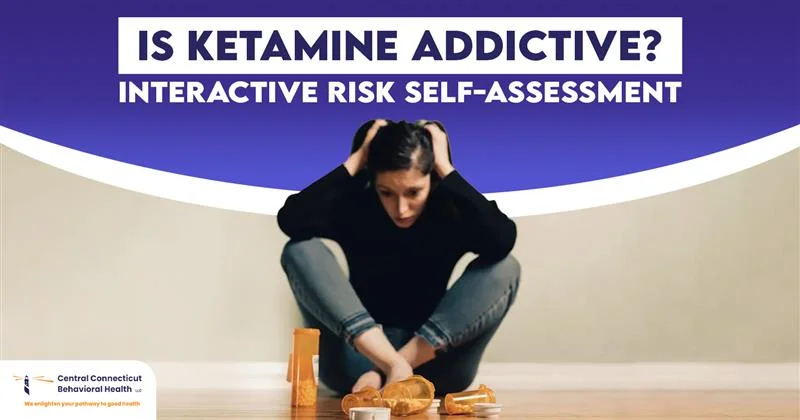
When a patient sits down with me and whispers, “Doctor… is Ketamine addictive?” I can always sense what lies beneath that question. It’s not simple curiosity. It’s fear, uncertainty, or sometimes guilt. Maybe you’ve been prescribed Ketamine for depression, maybe you’ve tried it recreationally, or maybe someone you love is struggling. But what you truly want to know is whether this medication — once used only as an anesthetic and now widely used for treatment-resistant depression — can create a dependency you never intended.
So, let me talk to you the same way I talk to my patients here at Central Connecticut Behavioral Health — calmly, honestly, and without judgement. The topic is complex. The science is evolving. And your experience, your symptoms, your body, your risk factors, and your background matter more than any generic answer online.
By the time you finish reading this, I want you to feel fully informed about how Ketamine affects the brain, what early signs of dependence look like, how withdrawal presents itself, and what you can do right now to assess your own risk. And yes, we will talk about the big question again: is Ketamine addictive?
We’ll also work through a detailed, clinically developed Ketamine addiction self-assessment quiz. Many patients tell me this is the first time they truly saw their behaviors clearly laid out.
Let’s begin with what Ketamine actually does to the brain and why some people become vulnerable.
A Doctor’s Explanation: How Ketamine Affects the Brain
Before discussing addiction, it’s important to understand the pharmacology. Ketamine is a dissociative anesthetic that interacts primarily with NMDA receptors, altering glutamate signaling, which is deeply connected to mood, memory, perception, and pain. In controlled therapeutic settings, this can help patients with severe depression feel a lift — sometimes the first relief they’ve felt in years.
But this same mechanism can also trigger reward pathways, dissociation, and emotional numbing. These effects are precisely why people ask: is Ketamine addictive?
If a substance brings relief, escape, or emotional detachment — especially for someone already overwhelmed mentally — the brain can begin to chase that feeling.
Early Signs and Symptoms of Ketamine Use
When I evaluate patients, I don’t look only at “addiction.” I look for patterns. These are often the first clues:
Physical Signs
- Frequent dizziness
- Blurred vision
- Slurred speech
- Unstable gait (feeling like your legs are heavy or “rubbery”)
- Elevated heart rate
- Nausea or stomach discomfort
Behavioral Signs
- Using Ketamine alone
- Using more than the prescribed dose
- Missing responsibilities due to the foggy, detached feeling
- Wanting to re-experience dissociation
Emotional Signs
- Feeling like Ketamine is the only thing keeping you stable
- Irritability between doses
- Numbing out stress rather than addressing it
- Anxiety when you don’t have access
I often tell patients, “Your symptoms are telling a story. You just have to listen carefully.”
Dependence vs. Addiction: Understanding the Difference
One of the most important distinctions I explain to patients is this:
- Dependence = the body adapts to the drug
- Addiction = compulsive behavior, cravings, inability to stop despite consequences
You can develop dependence without developing addiction. But dependence can, over time, transition into addiction — especially if you self-administer outside medical guidance.
Patients often ask me two specific questions during this part of the conversation:
- “Doctor, can you get addicted to Ketamine?
- “I need to know honestly… how addictive is Ketamine?
I answer both the same way: dependence is not automatic, but misuse, frequent dosing, and self-medicating emotional pain make addiction significantly more likely.
Withdrawal Symptoms: What Happens When You Stop?
Ketamine withdrawal rarely looks like opioid or alcohol withdrawal, but the symptoms can still be profoundly uncomfortable. Patients describe:
- Waves of anxiety
- Depression crashing back, often worse than before
- Insomnia
- Mood swings
- Intense irritability
- Cravings to escape emotional discomfort
- Body aches
- Cognitive slowing
Withdrawal is most common when someone has increased their dose over time or used Ketamine outside of medical guidance.
Long-Term Effects of Ketamine Use
Long-term misuse can affect both the brain and body. Over the years, I’ve treated patients who developed a range of long-term complications:
Brain-Related Effects
- Memory impairment
- Difficulty organizing thoughts or following conversations
- Emotional blunting
- Depersonalization
- Persistent anxiety
Bladder and Kidney Effects
- Frequent urination
- Painful urination
- Bladder inflammation (“Ketamine bladder”)
- Kidney stress
Psychological Effects
- Dependency on dissociation for stress relief
- Avoidance of emotional processing
- Worsening depression between uses
When patients hear this, they often ask again: is Ketamine addictive?
This is usually the moment they start reconsidering the way they’ve been using the medication.
Am I at Risk of Ketamine Addiction? A Clinician’s Perspective
Risk depends on several factors:
- History of depression or anxiety
- Past trauma
- Previous substance use issues
- Using Ketamine outside a therapeutic setting
- Using higher doses than prescribed
- Using alone frequently
- Using to escape emotional pain
- Feeling numb or disconnected from daily life
Many patients don’t realize how subtle the slide can be. Addiction doesn’t start with “I want to misuse Ketamine.” It often starts with “I want to feel okay.”
This is why patients sometimes ask: “Doctor, what is Ketamine addiction?
I describe it as a cycle where relief becomes something the brain chases, even when the consequences start piling up.
Is Ketamine Addictive When Used for Depression?
This is one of the most common concerns I hear from patients receiving Ketamine infusions or intranasal treatments for treatment-resistant depression.
Some ask directly: “Doctor, is Ketamine addictive when used for depression?
Here is the honest answer:
When used in a structured clinical environment with appropriate dosing intervals, the risk of addiction is low. But when someone begins self-adjusting their dose at home or seeking the emotional numbness of dissociation, the risk increases significantly.
Later in treatment, some patients also ask this question again.
Not because they doubt the first answer, but because they’re scared of how good the temporary relief feels.
Ketamine Addiction Risk: Understanding the Reality
I always explain the risk like this:
- Ketamine is not as physically addictive as opioids.
- It can become psychologically addictive.
- The brain may begin associating Ketamine with emotional escape.
- Increased frequency heightens risk.
- Taking it outside medical guidance is the biggest red flag.
This is exactly why people commonly ask: can you get addicted to Ketamine?
Because the line between relief and dependence can feel blurry.
How Addictive Is Ketamine? A Doctor’s Honest Answer
Patients sometimes whisper this question quietly, afraid of what I’ll say: how addictive is Ketamine?
I tell them it depends heavily on:
- Your brain chemistry
- Your emotional state
- Your life stressors
- Your dose
- Your frequency
- Your environment
Ketamine becomes addictive when it becomes a coping mechanism instead of a treatment tool.
Signs You May Be Developing Ketamine Addiction
Behavioral Signs
- Using Ketamine more frequently than prescribed
- Hiding usage from friends, partner, or family
- Difficulty stopping once you start
- Seeking dissociation as emotional escape
- Feeling frustrated during periods without Ketamine
Physical Signs
- Bladder pain
- Severe memory lapses
- Fatigue
- Difficulty focusing
- Psychological Signs
- Emotional numbness
- Anxiety when Ketamine isn’t available
- Feeling like you “need it” to function
This is often when a patient realizes the internal question is Ketamine addictive? is no longer hypothetical — it’s personal.
Interactive Ketamine Addiction Self-Assessment Quiz
This quiz is similar to what we use clinically. Answer honestly. Nobody is judging you.
For each question, answer:
Never / Sometimes / Often / Always
- Do you use Ketamine more frequently than originally prescribed?
- Do you feel emotional relief or escape after using Ketamine?
- Do you find yourself craving Ketamine when stressed?
- Have you increased your dose without consulting a doctor?
- Do you hide your Ketamine use from someone?
- Do you feel irritable, low, or emotionally unstable between doses?
- Have family or friends expressed concern?
- Have you used Ketamine alone when feeling overwhelmed?
- Do you think about Ketamine when you’re not using it?
- Do you rely on Ketamine to feel “normal” or stable?
- Has Ketamine affected your work, studies, or relationships?
- Do you feel out of control during or after using?
- Do you experience physical symptoms when not using?
- Do you feel guilty after using Ketamine?
- Do you emotionally depend on the dissociation Ketamine provides?
- Have you mixed Ketamine with alcohol or other substances?
- Do you use Ketamine even when you promised yourself you wouldn’t?
- Do you need more Ketamine to feel the same effect?
- Do you borrow money, skip obligations, or isolate yourself to use?
- Do you fear stopping because of how you may feel emotionally?
Scoring Guide
0–20 “Never” answers: Low risk
21–40 mix of “Sometimes”: Mild risk, worth monitoring
41–60 many “Often”: Concerning — signs of dependency
61+ “Always” responses: Strong likelihood of addiction — seek support
Your score does NOT define you. It only helps clarify what’s going on internally.
What Is Ketamine Addiction Treatment Like?
Patients often imagine rehab centers or harsh withdrawal programs — but that’s not what we do. Real treatment is compassionate, structured, and deeply therapeutic.
Treatment Options Include:
-
Detox in body if needed
Every patient don’t need this detox but in some severe withdrawal cases, it has proved to be beneficial in managing their symptoms.
-
Individual Therapy
We focus on the emotional root of Ketamine misuse:
- Avoidance
- Past trauma
- Depression relapse
- Stress overload
- Emotional numbness
-
Cognitive Behavioral Therapy (CBT)
Helps retrain the brain’s craving and reward patterns.
-
Trauma-Informed Therapy
Many Ketamine addiction patients carry old emotional wounds.
-
Medication Management
Sometimes antidepressants or stabilizers help reduce cravings and stabilize mood.
-
Relapse Prevention Planning
You learn triggers and replacement coping strategies.
-
Family Support and Counseling
Addiction never happens in isolation.
Ketamine Addiction Treatment Options Near Me
If you’re reading this from Connecticut, you have access to comprehensive, confidential, evidence-based care. Central Connecticut Behavioral Health provides:
- Addiction evaluation
- Co-occurring mental health treatment
- Personalized therapy
- CBT and DBT
- Medication-assisted support
- Safety planning
- Long-term stabilization
Whenever a patient asks where to begin, I tell them:
“Start with a conversation. Treatment begins with honesty.”
Final Words: A Doctor’s Honest Reflection
If you’ve read this far, something inside you is looking for clarity — maybe even help. You might not be fully addicted, but you may be worried about your relationship with Ketamine. You may be noticing early emotional dependency. Or you may simply be scared that something meant to help you heal could also harm you.
Let me reassure you:
You’re not broken. You’re not weak. You’re not alone.
As a clinician, I’ve seen people walk in with shame, fear, confusion, and guilt. I’ve also seen those same people rebuild their lives with the right support. What matters most right now is acknowledging your concern, asking questions, and taking the next step toward understanding your own risk.
So ask yourself once more — gently, honestly — is Ketamine addictive?
This final time, the question isn’t about general science. It’s about you and your wellbeing.
You deserve clarity. You deserve to be stable. You deserve support.
And we’re here to help you find it.
FAQs
-
How do I know if my Ketamine use is becoming unsafe?
To have this knowledge you should first look for any increase in its frequency, unusual cravings, emotional dependence, and hiding its usage anxiously. If you find any of these changes appearing in your life, then it is a sign for seeking professional evaluation.
-
Can Ketamine cause long-term memory or bladder problems?
It can absolutely cause long-term cognitive and kidney dysfunction if misused. Early intervention dramatically reduces the risk.
-
What’s the difference between dependence and addiction?
Dependence is physical adaptation. Addiction includes compulsive behavior, cravings, emotional withdrawal, and inability to stop.
-
Is Ketamine safe when administered medically?
Absolutely, when ketamine is administered under expert supervision with controlled dose and structured environment. If it is misused away from any medical supervision then addiction risk may increase.
-
Is therapy necessary for Ketamine addiction?
Absolutely. Ketamine doesn’t only affects chemically but it can appear behaviorally, emotionally, and physically as well. In this case therapy helps in locating the actual cause.
-
How soon can I start treatment at Central Connecticut Behavioral Health?
You can schedule an evaluation immediately. Early support leads to better outcomes and safer recovery.