
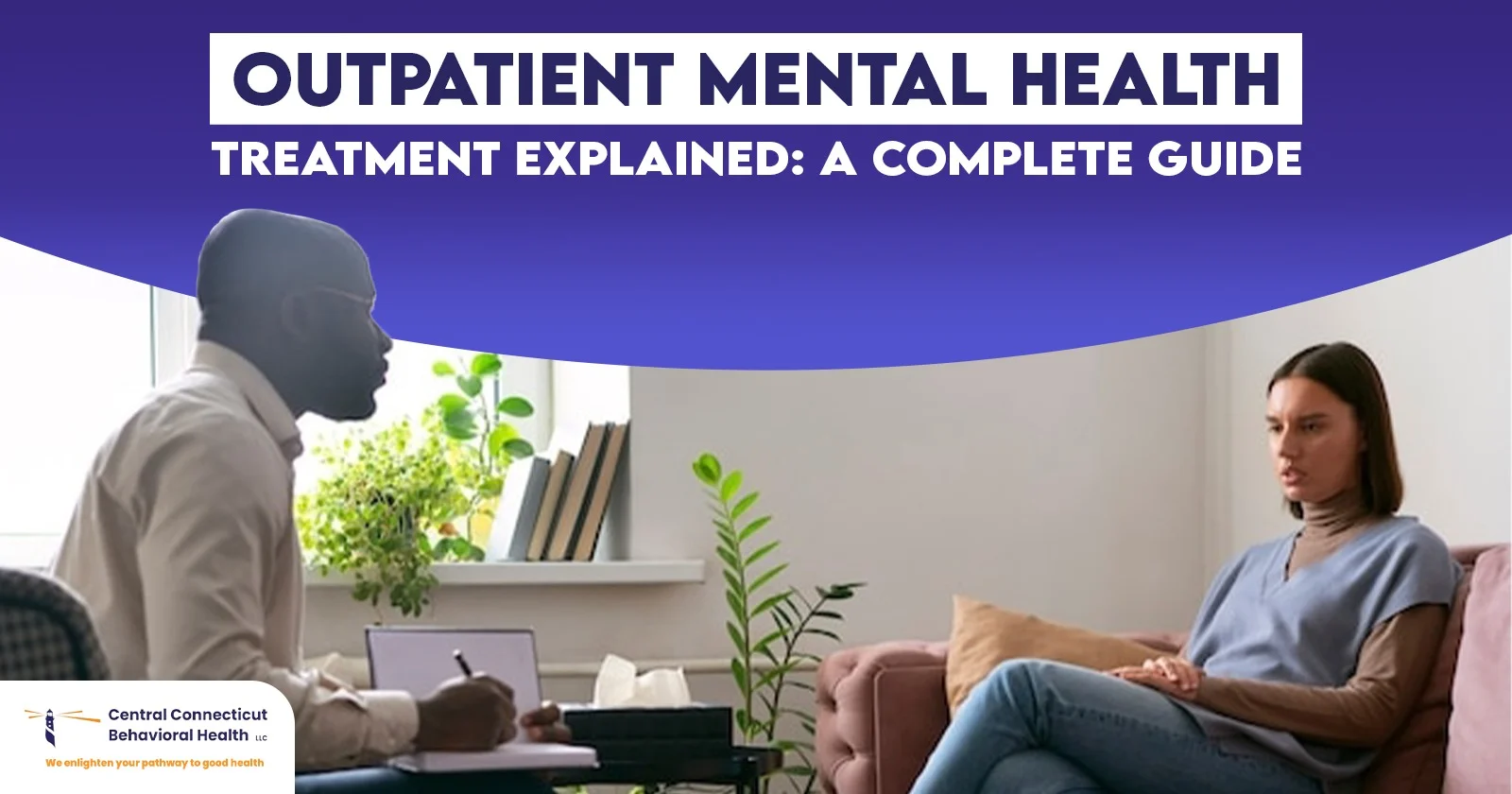
When I sit with new clinicians at Central Connecticut Behavioral Health, the same concern often comes up. Families call every day asking, Is my loved one sick enough for hospitalization? Or can they be treated while living at home? Behind that question is another one I hear repeatedly: what is outpatient mental health treatment and how does it truly work in real life?
This guide is written the way I would explain it to my own team—thoughtfully, carefully, and with real-world clarity. Mental health care is not one-size-fits-all. Some people need round-the-clock supervision. Others need structured support while continuing work, school, and family life. Understanding these differences can change outcomes for patients and peace of mind for families.
what is outpatient mental health treatment
When new staff members join our clinic, I begin with a simple explanation. what is outpatient mental health treatment is care provided without requiring the patient to stay overnight in a hospital or residential facility. The person lives at home and attends scheduled therapy sessions, psychiatric evaluations, or medication follow-ups during the week.
In practical terms, this means a patient struggling with anxiety, depression, trauma, or mood instability can receive consistent professional support while continuing daily responsibilities. They come in for care, receive treatment, and return to their normal environment the same day. This flexibility often makes treatment more approachable and less intimidating.
In many of the individuals, we have noticed reduced stigma and fear with this approach. These individuals are not admitted anywhere. Instead they actively participate in a guided and expert let process that respects their independence. During this process, experts ensure to address their needs for mental health in a genuine and professional manner.
Understanding the outpatient mental health definition
The outpatient mental health definition refers to structured psychiatric and therapeutic services delivered to individuals who do not require 24-hour medical supervision. It focuses on regular appointments, monitoring, and therapeutic engagement without overnight stays.
When we explain the outpatient mental health definition to families, we emphasize stability. Outpatient care is appropriate when a person is not in immediate danger to themselves or others and can safely function in their community. It bridges the gap between doing nothing and requiring hospitalization.
This clarity helps reduce confusion. Many people assume treatment must be extreme to be effective. In reality, structured outpatient care can be powerful when applied early and consistently.
Types of Outpatient Mental Health Treatments
To fully understand what OP mental health treatment is, it helps to look at the different forms it can take. Not all outpatient programs are identical. They vary in intensity and structure.
-
Standard Therapy Combined with Medication Management
The most common form is standard therapy combined with medication management. A patient may see a therapist weekly and a psychiatric provider monthly. This approach works well for stable conditions such as mild to moderate depression or anxiety.
-
Intensive Outpatient Programs (IOP)
More structured programs include Intensive Outpatient Programs (IOP) and Partial Hospitalization Programs (PHP). IOP typically involves several therapy sessions per week for a few hours each day. PHP is more structured, often meeting five days a week for extended sessions, but patients still return home in the evenings.
-
Group Therapy
Group therapy is another important component. Patients often find comfort in shared experiences. Hearing someone else describe similar fears or symptoms can reduce isolation and shame. At Central Connecticut Behavioral Health, we see strong outcomes when individual therapy and group support are combined strategically.
Outpatient Mental Health Services explained
-
Goal-Driven Clinical Process
When families request that we have outpatient mental health services explained, they are usually trying to understand what actually happens during visits. It is not simply “talking about feelings.” It is a structured, goal-driven clinical process.
-
Mental Health Services
Services may include psychiatric evaluations, diagnosis, medication management, cognitive behavioral therapy, trauma-focused therapy, family counseling, and telehealth sessions. Each service is selected based on the patient’s needs, not a fixed template.
-
Reviews Treatment Plans
Later, when staff reviews treatment plans together, we often revisit how outpatient mental health services must remain personalized. No two patients follow the same path. Some need short-term therapy during a life transition. Others require long-term support for chronic conditions.
How Outpatient Treatment Works in Real Practice
When colleagues ask me during supervision rounds, what is outpatient mental health treatment in real clinical practice, I describe it as a partnership. The patient shows up consistently. The clinician tracks symptoms, adjusts interventions, and measures progress.
The process usually begins with a comprehensive psychiatric evaluation. This includes medical history, family history, current symptoms, risk assessment, and treatment goals. From there, a customized plan is created.
Sessions are structured. Therapists use evidence-based approaches. Medication is prescribed carefully and monitored. Follow-up appointments track improvement, side effects, and setbacks. Treatment is active, not passive.
One key element is accountability. Patients must attend appointments and apply coping skills outside sessions. Unlike inpatient settings, the work continues in real-world environments.
What to Expect at outpatient mental health therapy
Patients often arrive nervous before their first session of mental health therapy for outpatients. Majority of them expect it to be cold and judgmental. Instead, they always find it calm, confidential, and strategically understanding.
Thorough assessment and trust-building is carried out in the first few sessions. A licensed therapist listens to their stories, identify the issues, design a plan according to the one’s need, and monitor carefully. With the passage of time this therapy shifts to skill-building. This approach helps them learn coping strategies, regulation in emotions, and communication skills.
During ongoing outpatient mental health therapy, progress may feel gradual. Some weeks show visible improvement. Other weeks feel heavy. This rhythm is normal. Healing is rarely linear, and part of therapy involves learning patience with the process.
Outpatient mental health versus inpatient
The discussion about difference between outpatient mental health and inpatient treatment often arises during crisis assessments. The difference lies primarily in intensity and supervision.
Inpatient treatment involves hospitalization. Patients stay in a controlled environment with 24-hour monitoring. This is necessary when someone is at immediate risk of self-harm, suicide, or severe psychiatric instability.
When comparing outpatient mental health versus inpatient care, we remind families that inpatient treatment is short-term stabilization. Outpatient care often continues long after discharge to maintain recovery and prevent relapse.
Merits and Demerits of Outpatient and Inpatient Care
Outpatient treatment offers flexibility. Patients maintain jobs, attend school, and remain with family. Costs are generally lower. Stigma is reduced. Independence is preserved.
However, outpatient care requires personal responsibility. Few patients can struggle with consistency. Other factors like unstable environment in home, conflicts with scheduling, or transportation can interfere with their progress journey.
Inpatient treatment provides immediate safety and intensive support. Medication adjustments happen quickly. Crisis stabilization is more controlled. Yet it is disruptive. Patients step away from normal life, which can create stress related to work, finances, or childcare.
In clinical team meetings, we always weigh risk, safety, and stability before recommending one over the other. The right level of care depends on symptom severity and environmental support.
Costs: Which Is More Expensive?
Before committing to care, families often revisit the question: what is outpatient mental health treatment and how does it compare financially?
Outpatient care is significantly less expensive than inpatient hospitalization. Inpatient treatment includes room, meals, constant staffing, and medical monitoring. Costs can rise quickly, especially without insurance coverage.
Outpatient services basically includes the fees based on session. Though over months the cost of therapy adds up in this fees, it still couldn’t reach the total cost of even a short stay at hospital. Insurance policies provides a broader coverage for outpatient services which makes it even more reachable. Cost should never be the only deciding factor, but it is an important practical consideration.
Hurdles Patients May Face in Outpatient Care
Even when clinically appropriate, outpatient treatment has challenges. Transportation barriers, work schedules, and family responsibilities can interfere with attendance.
Some patients struggle with motivation. Symptoms like depression can be reduced within 24-hours of supervision after follow-ups. Other patients may face hurdle as their family members don’t really trust or accept any mental health treatment.
At Central Connecticut Behavioral Health, we address these hurdles proactively. Telehealth options, reminder systems, and family education reduce barriers and improve adherence.
Benefits of Structured Outpatient Care
When implemented correctly, outpatient mental health therapy offers long-term growth rather than short-term stabilization alone. Patients practice coping skills in real-life situations between sessions, which strengthens resilience.
Outpatient care also encourages autonomy. Patients learn to manage symptoms while living in their normal environment. This builds confidence and sustainable habits.
Community integration is another major benefit. Outpatient programs makes communication strong and creates healthy boundaries within families rather than separating these individuals from their support systems.
Final Words
We often discuss with the team that decisions for mental health treatment are often complicated. It is not just about definitions to answer the question “What is outpatient mental health treatment?” It is about safety, readiness, and the patient’s ability to function outside a hospital setting.
Outpatient care can be transformative when symptoms are moderate and support systems are stable. Inpatient care can be lifesaving during a crisis. Neither approach is “better” in all situations. They serve different clinical purposes.
Our main goal is to consider thoughtful assessment and individualized treatment planning at Central CT Behavioral Health. The goal remains the same for both outpatient guided support and any short hospital stay. We make sure to provide them with long-term support, expert monitoring, healing, and stability to improve their well-being.
Choosing care is not a sign of weakness. It is a step toward clarity and strength.
FAQs (Frequently Asked Questions)
-
How do I know if outpatient care is enough?
Outpatient care is enough for those patients who are not at any risky health stage and can manage their functions at home safely. Right level of support can be determined by a thorough psychiatric assessment.
-
How long does outpatient treatment usually last?
It varies. Some people attend therapy for a few months. Others continue for years, depending on their condition and goals.
-
Is outpatient treatment confidential?
Yes. Absolutely their treatment sessions are protected under the laws of healthcare confidentiality.
-
Can someone move from inpatient to outpatient care?
Yes. Majority of the patients gets shifted to outpatient services to prevent relapse and maintain safe progress after being discharged from hospital.
-
Does insurance cover outpatient treatment?
Most insurance plans provide coverage for therapy and psychiatric visits. Coverage details depend on the individual policy.
-
What makes Central Connecticut Behavioral Health different?
You will find an individualized, evidence-based, and expert-led approach at CT Behavioral Health. We assess our patients thoroughly and support them throughout their treatment journey.