
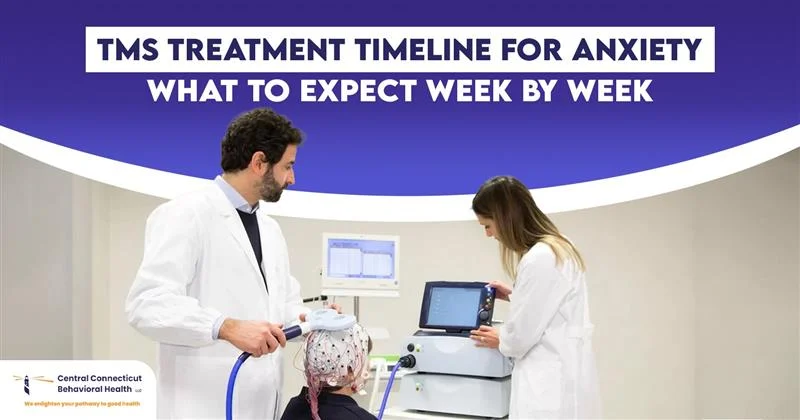
TMS treatment timeline for anxiety helps patients understand how improvement happens step by step during Transcranial Magnetic Stimulation therapy. This treatment is non-invasive and uses magnetic pulses to support healthier brain activity linked to anxiety symptoms. Many patients feel calmer and more hopeful when they know what to expect during each stage of care. TMS treatment timeline for anxiety is not the same for everyone, but most people experience changes in a gradual and structured way. Understanding this process reduces fear and builds trust in the treatment journey.
Central Connecticut Behavioral Health is helpful for patients because it offers structured care, personalized treatment plans, and compassionate clinical support throughout the entire process.
Understanding TMS Therapy for Anxiety
TMS treatment for anxiety is a brain-based therapy that targets specific areas linked to emotional regulation. It does not require surgery, anesthesia, or medication changes in most cases. Magnetic pulses gently stimulate underactive brain regions associated with anxiety and mood balance.
Unlike medication, TMS works locally in the brain. Sessions are short and usually last under an hour. Patients remain awake and alert. Over time, repeated stimulation helps retrain brain pathways.
Why TMS Is Used for Anxiety
Anxiety often involves overactive fear circuits and weak emotional control systems. TMS helps restore balance. This approach is useful for patients who did not respond well to medication or therapy alone.
Preparing for TMS Treatment
Preparation is simple and stress-free. Patients attend an initial consultation and brain mapping session. This helps determine the correct placement and strength of stimulation.
What Happens Before Treatment
- Clinical assessment
- Symptom review
- Treatment scheduling
No lifestyle changes are usually required. Patients can continue daily routines, work, and social activities.
TMS Treatment Timeline for Anxiety: Week-by-Week Overview
Understanding TMS treatment timeline for anxiety helps patients stay patient and realistic. Results develop gradually.
TMS treatment timeline for anxiety reflects average progress, not guarantees.
Week 1: Adjustment Phase
The first week focuses on comfort and adaptation. Patients may feel tapping sensations on the scalp. Mild headaches can occur but usually fade quickly.
Emotionally, many patients feel neutral during this stage. Brain stimulation is beginning, but noticeable symptom relief is rare early on.
Week 2 – Emotions begin to move
Medical studies have indicated a correlation between anticipation of taking TMS and the level of anxiety. In the early part of week two, many people see a difference in their emotional state.
People often report improvement in the quality of their sleep, and that their feelings of anxiety are lessening slightly than they did prior to starting TMS.
The early weeks of the TMS course graphically demonstrate that change (or moving toward the original status of the brain) occurs over time.
Week 3 – Developing Emotional Regulation
As we move forward to week three, we are beginning to see definite improvement in emotional control, especially under stressful conditions.
In week three, many people are calmer and have less racing thoughts than they did at the beginning of treatment. However, week three has many benefits, and continues to require patience.
Progressing to week four provides the patient with the ability to experience emotional balance and presence of mind.
Week 4: Symptom Reduction Period
By the fourth week of TMS (Transcranial Magnetic Stimulation) treatment, patients generally see a significant improvement; including reduced panic symptoms, and they typically feel much more connected and stable. The fourth week is a significant moment along the journey of TMS for Anxiety Disorder, as most patients experience an increased level of motivational energy during this phase.
Weeks 5 and 6: Stabilization Period
Subsequent weeks have been employed to maintain and enhance the progress made throughout the previous weeks. Patients are able to develop better emotional regulation and gain increased self-esteem (confidence). In addition, patients often share their experiences including;
- Enhanced ability to handle stress
- Reduced frequency and/or intensity of anxiety spikes
- Improved capability of performing daily tasks.
Accelerated and Extended TMS Timelines
Some patients qualify for accelerated TMS anxiety timeline programs. These involve multiple sessions per day over a shorter period. Others may need extended care.
Providers adjust plans based on response and symptom severity.
How Long Does TMS Take to Work for Anxiety?
Early changes can appear in two to three weeks. Full benefits usually appear by week four to six.
Long-term improvement continues even after sessions end.
TMS Sessions Per Week for Anxiety
Standard care includes TMS sessions per week anxiety five times weekly. This frequency ensures consistent brain stimulation.
Reducing frequency too early may affect outcomes.
TMS Side Effects Timeline for Anxiety
The TMS side effects timeline anxiety is usually mild. However, most effects will occur within the early treatment sessions.
Typical side effects include:
- Discomfort on the scalp during the TMS procedure.
- Small headaches.
- Fatigue which lasts only until after the treatment.
There are rare chances of having severe side effects and providers come to see their patient frequently.
Final Words
Anxiety requires a timeframe for TMS treatment, indicating that it’s an ongoing process. Many patients experience significant and measurable improvements in their quality of life after undergoing TMS treatment with consistency and support from professional caregivers.
TMS treatment timeline for anxiety is used in treating anxiety by increasing your level of emotional stability, helping you build resiliency to stressful events, and getting you back into the daily activities that bring joy to your life.
By dividing the program into specific phases , TMS will help the patient develop a sense of control over their recovery and the unknown aspects of TMS that might cause anxiety.
Central Connecticut Behavioral Health has developed a comprehensive program that provides the expertise, emotional support, and customized recovery plan you need at every phase of your TMS treatment.
FAQs
What is TMS treatment timeline for anxiety?
It is a week-by-week process showing how symptoms improve during TMS therapy.
Is TMS treatment for anxiety painful?
No. Most patients feel mild tapping or pressure only.
When will I feel better?
Many patients notice improvement within three to six weeks.