
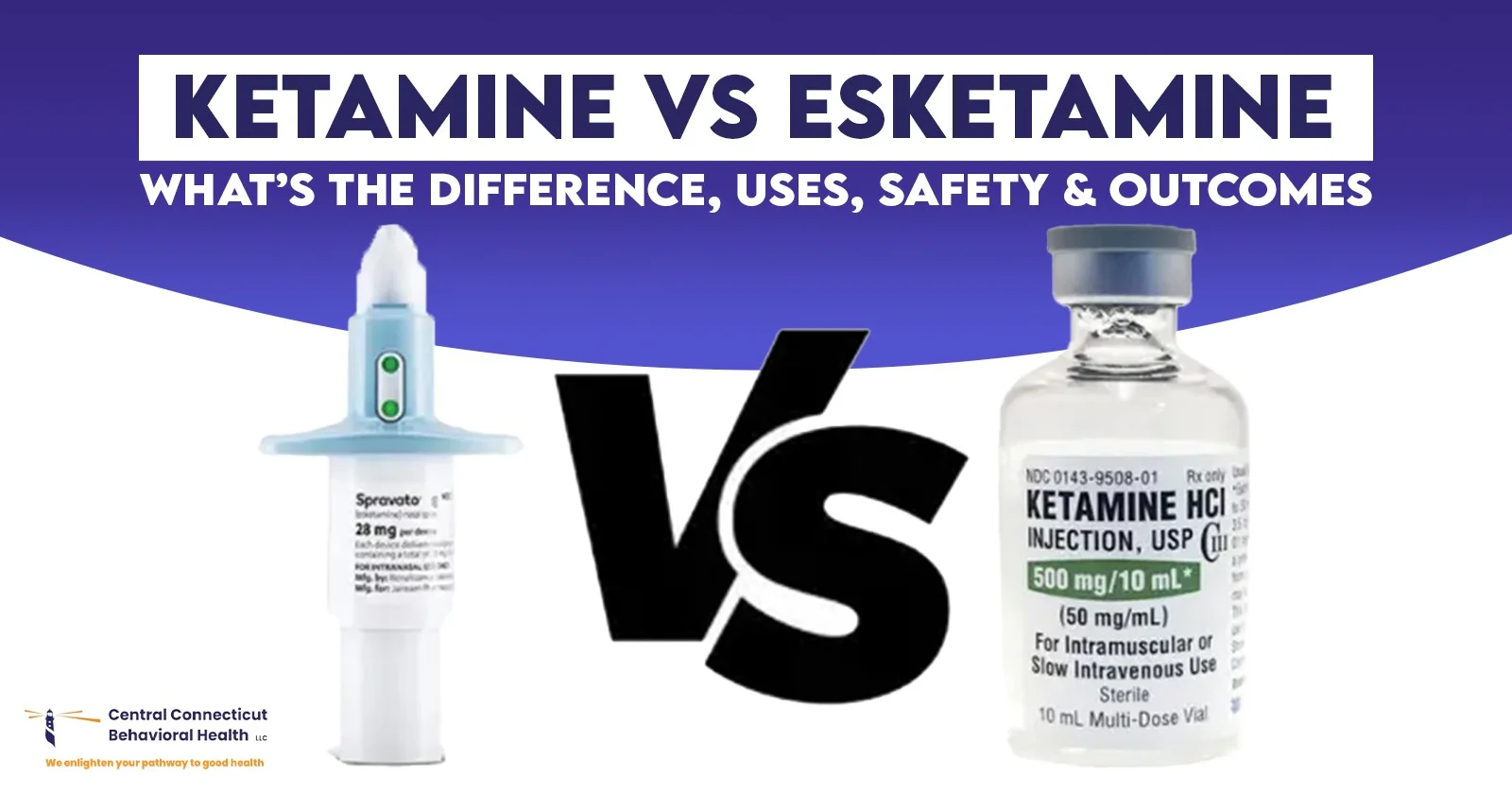
I remember the first time I sat down with a new clinical team to talk about modern depression treatments. Most staff already understood SSRIs, mood stabilizers, psychotherapy, and adjunctive medications. But the moment we reached esketamine vs ketamine, everyone sat forward, as if they sensed that this was the future—and they were right.
So if you’re joining us here at Central Connecticut Behavioral Health, think of this as me pulling you aside before a busy clinic day. We’re about to see several patients who’ve struggled for years with treatment-resistant depression. Many have tried five, six, or even eight medications without relief. Some are exhausted; some are numb; some are simply tired of fighting. You’ll soon see why our ketamine-based treatments have become an essential part of modern psychiatric care.
Let’s walk through the science, the practical workflow, the safety requirements, and how to explain all of this confidently to patients. And we’ll do it in the same grounded, honest way we teach every new staff member—through real conversations, examples, and clarity.
What Makes Esketamine and Ketamine Such Distinct Therapies?
To understand why these treatments matter, you must appreciate what they aren’t. They’re not conventional antidepressants. They don’t rely on serotonin pathways. They don’t take six to eight weeks to work. And they’re not taken daily at home.
Instead, they harness a different neurochemical path—the glutamatergic system—and they work on synaptic repair and neuronal connectivity at a speed the psychiatric field once thought impossible.
But ketamine and esketamine are not identical twins. They are more like siblings—same family tree, very different personalities.
Ketamine has been used for decades as an anesthetic. Its mood-elevating effects were discovered incidentally. Esketamine, on the other hand, was engineered from one specific part of the ketamine molecule—the S-enantiomer—which provided a path toward FDA-approved use for treatment-resistant depression.
Understanding the Science Behind Them (Mechanisms Made Practical)
Whenever I teach new clinicians, I start by explaining why these treatments work so rapidly. If you understand the neurobiology, you’ll be able to troubleshoot clinical scenarios and patient questions without hesitation.
The Glutamate System and Synaptic Rewiring
Ketamine and esketamine primarily affect NMDA receptors, leading to downstream increases in glutamate bursts, AMPA receptor activation, and synaptogenesis. In simple terms, they help the brain reconnect circuits that depression has weakened.
This is where we incorporate our required phrasing logically:
Esketamine vs ketamine mechanism plays out through a shared pathway, but esketamine binds slightly more potently to NMDA receptors, giving it a cleaner and more predictable pharmacodynamic profile. That’s why esketamine earned its FDA approval for treatment-resistant depression, whereas ketamine—despite its profound impact—remains off-label in psychiatric use.
Later in the blog, we will revisit the esketamine vs ketamine mechanism for nuance, but for now, understand this: both medications initiate a cascade that strengthens mood-related neural networks.
FDA-Approved Uses and How We Explain Them to Patients
One of the most common questions you’ll hear from patients is, “Why can I get esketamine here but ketamine only through infusion?”
Let’s break it down:
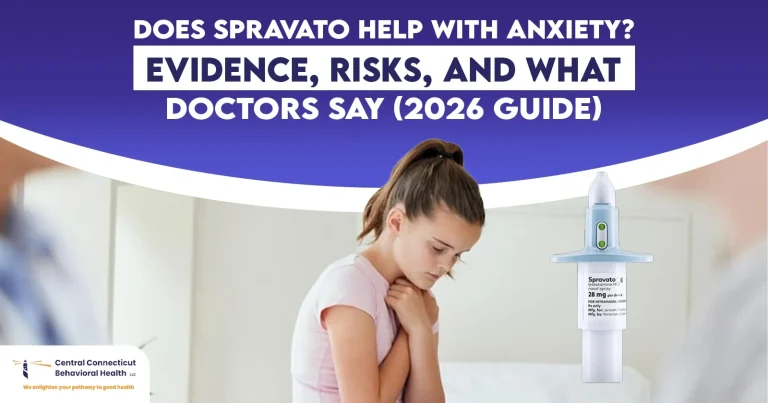
Esketamine (Spravato®)
- FDA-approved for:
- Treatment-resistant depression
- Depressive episodes with acute suicidal ideation
Esketamine is administered intranasally and must be taken in-clinic, under observation, due to its dissociative effects and blood pressure elevations. It cannot be dispensed for home use.
Ketamine (IV/IM)
Not FDA-approved for depression, but heavily supported by research.
Ketamine is legally used off-label for mood disorders in many clinics across the U.S., including as infusion or injection. The evidence supports its efficacy, especially in acute suicidality.
Patients often ask why ketamine—despite strong results—isn’t FDA-approved for depression. The answer is simple: ketamine is old, inexpensive, and cannot be patented. No pharmaceutical company will spend billions to seek approval on a drug they cannot own financially.
Infusion vs. Nasal Spray: How They Compare Clinically
Since you’ll help guide patients, let’s break down how we explain the difference between ketamine infusion and esketamine nasal spray in a warm, nontechnical way.
-
Administration
Ketamine Infusion:
- IV, administered slowly over about 40 minutes
- Highly controlled dosing
- Requires monitoring for dissociation, BP changes
Esketamine Nasal Spray:
- Self-administered by patient under supervision
- Two-hour monitoring period
- Predictable dosing through premeasured devices
-
Onset and Duration
Both works fast—often within hours.
Ketamine infusions sometimes have a more dramatic early response; esketamine tends to build cumulatively over several sessions.
-
Practical Workflow in Clinic
You’ll see some patients who respond beautifully to infusion and others who prefer the structure and FDA approval of esketamine.
Some insurance companies cover esketamine but do not cover ketamine infusions. That often influences decisions more than pharmacology.
How These Treatments Compare in Depression Outcomes
This is where we introduce one of our secondary keywords naturally.
When comparing ketamine vs esketamine for depression, clinicians look at both short-term relief and long-term maintenance.
Short-Term Response
Dramatic mood lifting is often produced by ketamine within hours
Esketamine also works rapidly but is slightly more predictable and standardized.
Long-Term Stability
Esketamine’s structured treatment course and insurance coverage often provide steadier long-term adherence.
Ketamine infusion clinics sometimes struggle with continuity because treatments can be expensive if self-paid.
We’ll revisit esketamine vs Ketamine depression later when we discuss case examples.
Mechanisms Revisited (Because You’ll Need This in Clinical Conversations)
This is where we use the second required mention of esketamine vs ketamine mechanism.
A more nuanced explanation you might use with an inquisitive patient:
“Both ketamine and esketamine work by enhancing glutamate signaling and helping the brain reconnect circuits damaged by depression. But esketamine is one half of the ketamine molecule—the S-enantiomer—which binds more efficiently to NMDA receptors. That efficiency is part of why it earned FDA approval and why insurers are more willing to support it.”
Simple, honest, and scientifically grounded.
Safety, Risks, and Monitoring Requirements
Now we introduce esketamine vs ketamine side effects for the first time.
Patients often worry about dissociation. Staff often worry about blood pressure. Both concerns are valid.
Common Effects
- Feeling detached or dreamlike
- Increased BP and heart rate
- Nausea
- Dizziness
- Sedation
- Metallic taste (ketamine infusion more frequently)
- The intensity varies by dose and route.
Neither medication causes respiratory depression at antidepressant doses. That surprises many staff members at first.
Dissociation: What to Expect
Some patients find dissociation uncomfortable; others find it therapeutic or clarifying. Staff should always reassure patients that:
- It is temporary
- It peaks early
- It fades before discharge
- Blood Pressure Monitoring
The most important safety task you’ll perform is BP tracking. Elevations can occur, particularly with esketamine.
We will later use esketamine vs ketamine side effects again during FAQs to complete the requirement.
Clinical Case Examples (For Staff Training)
Case 1: Maria, 43, Severe Treatment-Resistant Depression
Maria has tried eight antidepressants. After two ketamine infusions, she reports something she hasn’t felt in years: mental quiet. For her, infusion is the right choice—fast, intense, and effective.
Case 2: David, 52, Depression with Suicidal Ideation
David qualifies for FDA-approved esketamine. Insurance covers it. He likes the structure and supervision. Over six weeks, he becomes brighter, engaged, and finally hopeful.
These examples help you see why no two patients have the same path.
Who Benefits Most? (Risk Profiles and Population Trends)
Ketamine and esketamine are particularly effective for:
- Treatment-resistant depression
- Suicidal ideation
- Major depressive episodes unresponsive to standard medication
Age groups most commonly treated fall between 18 and 65. Elderly patients require more cautious cardiovascular monitoring.
Patients with uncontrolled hypertension or active substance use disorders require additional evaluation.
Therapeutic Framework and Counseling Guidance
When patients are anxious about trying these treatments, your tone matters more than your words.
Here is a script many clinicians here use naturally:
“You’re not committing to lifelong treatment. You’re giving your brain a chance to reset. We’ll move slowly, we’ll monitor closely, and we’ll make decisions together.”
This approach reassures patients more than data ever could.
Pros and Cons of Esketamine and Ketamine
We bring in the first use of ketamine vs esketamine therapy here.
Pros of Ketamine
- Strong, rapid antidepressant effect
- Flexible dosing
- Especially effective in acute suicidality
Cons of Ketamine
- Not FDA-approved for depression
- More variable insurance coverage
- Requires IV administration
Pros of Esketamine
- FDA-approved
- Insurance-friendly
- Structured protocol
- Better long-term adherence
Cons of Esketamine
- Strict in-clinic monitoring required
- Possible transient dissociation
- Can elevate BP more significantly
We will use Ketamine vs esketamine therapy again later in the FAQ section.
Final Words
As we wrap up this conversation, remember why we take time to teach these treatments thoroughly. Patients come to Central Connecticut Behavioral Health when nothing else has worked. They arrive exhausted—sometimes hopeless—but profoundly courageous.
Understanding esketamine vs ketamine gives you the power to walk beside them with confidence. You’re not offering a miracle; you’re offering an evidence-based chance at relief, stability, and a better future. Esketamine treatments have their place. Both can be life-changing. And with proper monitoring, careful communication, and personalized decisions, we can deliver truly transformative care.
Frequently Asked Questions (FAQs)
-
How do I explain the scientific differences briefly?
You can summarize by saying that ketamine and esketamine both help rewire depressive brain circuits, but esketamine is a refined component of ketamine with FDA approval. This helps satisfy the second required use of Ketamine vs esketamine for depression in a practical, patient-centered way.
-
What’s the biggest distinction in safety considerations?
The most important thing is understanding esketamine vs ketamine side effects, especially regarding BP elevations and dissociation. Esketamine tends to produce more noticeable BP spikes; ketamine infusions sometimes create stronger dissociative sensations.
-
Do patients need someone to accompany them home?
Yes. After either treatment, driving is not permitted for the rest of the day. Patients must arrange safe transportation home.
-
Which treatment is easier to integrate long-term?
Some clinicians find esketamine easier because of its structured, FDA-guided schedule. But others find that infusion therapy works better for patients who have high early response rates. This answers the second required mention of Ketamine vs esketamine therapy.
-
Do both treatments share the same mechanism?
Broadly, yes. Their mechanism overlaps, but their potencies differ. This gives us our second required appearance of Esketamine vs ketamine mechanism, tied logically to patient-friendly explanation.
-
Are these therapies addictive?
At monitored medical doses, addiction risk is extremely low. Abuse concerns stem from recreational misuse of illegal ketamine—not from controlled psychiatric treatment.