
Living with panic disorder can feel overwhelming, exhausting, and isolating. Many people struggle daily with sudden panic attacks, fear of the next episode, and limits on work, relationships, and simple activities.
Research over the past decade has shown growing interest in TMS for panic disorder treatment as a non-invasive option for people who do not feel better with therapy or medication alone.
At Central Connecticut Behavioral Health, patients receive compassionate care, education, and guidance to explore modern treatment options like TMS in a supportive and respectful environment.
Understanding Panic Disorder and Its Impact
Unlike normal instances of anxiety, panic disorder happens multiple times, with lightning-fast onset (no warning), and results in panic attacks.
There are several symptoms related to panic disorder: palpitations, clammy hands, sweating and lightheadedness. Many individuals with panic disorder also develop avoidance patterns which may lead to decreased quality of life; this includes not driving anymore, staying out of social environments or being afraid to be alone.
There appears to be a direct association between panic disorder and certain changes that occur in the brain’s circuitry responsible for fear and stress.
Because of this relationship, researchers are looking into therapies that affect brain activity directly and offer a new understanding of how it works.
This is why panic disorder has become a focus area for transcranial magnetic stimulation panic disorder.
What Is TMS and How It Works
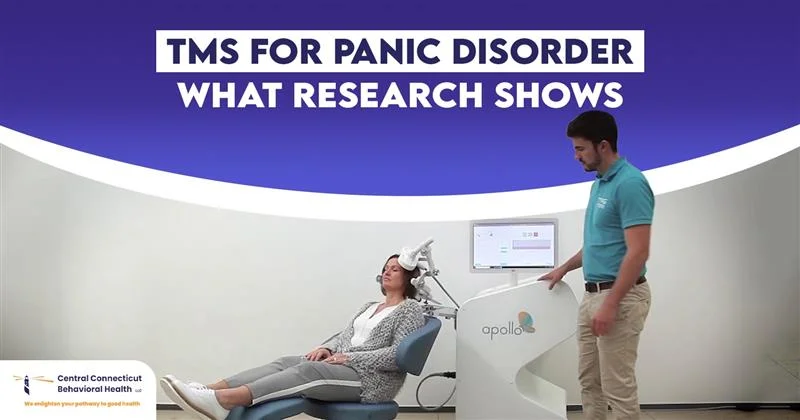
Transcranial Magnetic Stimulation, or TMS, is a non-invasive brain stimulation therapy. It uses magnetic pulses to activate specific areas of the brain.
TMS does not require surgery or anesthesia. Sessions are done while the patient is awake and seated.
The treatment focuses on brain regions involved in mood, anxiety, and emotional control. By improving communication in these areas, symptoms may decrease over time.
Research shows that repeated sessions are needed to create lasting brain changes. This is why TMS is delivered over several weeks.
Transcranial Magnetic Stimulation Panic Disorder: What Research Shows
Studies suggest that stimulating the prefrontal cortex may help regulate fear responses.
TMS appears especially helpful for people who have not responded well to medication. This includes those with treatment-resistant symptoms.
Researchers continue to study the best stimulation patterns, session length, and treatment duration.
rTMS and Panic Disorder
rTMS panic disorder refers to repetitive transcranial magnetic stimulation. This means pulses are delivered repeatedly to strengthen their effect.
Repetition helps the brain form new, healthier patterns of activity. Over time, this may reduce panic responses.
TMS for Panic Attacks and Symptom Relief
Many people ask whether TMS for panic attacks can reduce sudden episodes. Research suggests that while TMS does not stop panic instantly, it may lower attack frequency over time.
Patients often report fewer intense attacks after completing treatment.
TMS for panic attacks may also reduce anticipatory anxiety. This is the fear of having another attack.
These improvements can help people regain confidence and independence.
Deep TMS and Accelerated TMS Approaches
Certain clinics offer protocols for deep TMS panic disorder using unique coils that access deeper areas of the brain than traditional TMS.
Preliminary studies appear to show that patients may benefit from deeper brain stimulation than what has been historically researched.
Other options for treating panic disorder are currently being researched; one example is referred to as accelerated TMS panic disorder, where multiple treatments occur over a condensed period of time versus spaced out over weeks to months.
These methods are undergoing research at this time but may lead to shorter treatment durations overall.
Does TMS Work for Panic Disorder?
The range of responses to research is quite wide, with some patients reporting significant gains while others may report only some measure of improvement.
The severity of the symptoms, the frequency with which treatments are used and the presence of other medical conditions will affect the overall outcome.
As such, ongoing research will continue to help identify more appropriate patient populations and treatment protocols.
TMS vs Medication for Panic Disorder
Medications affect the entire brain using chemical compounds as a means of effecting change, whereas TMS uses magnetic energy to stimulate the brain in very specific parts of the brain. Many patients choose to use TMS psychotherapy instead of taking medications daily. Current research indicates that TMS may be useful for patients who cannot take medications due to side effects.
TMS for Treatment-Resistant Panic Disorder
Treatment-resistant means symptoms persist despite therapy and medication. Studies show that TMS may offer new hope for this group. This has expanded interest in TMS as part of comprehensive care plans.
Safety and Side Effects of TMS
Many people ask about TMS for panic disorder side effects. Common side effects include mild scalp discomfort or headache.
Serious side effects are rare. Research supports TMS as a safe option when delivered by trained professionals.
Is TMS Safe for Panic Attacks?
Studies show TMS does not trigger panic attacks during treatment. Most patients tolerate sessions well. Safety screenings are done before starting treatment.
How Many Sessions Are Needed?
Patients often ask how many TMS sessions for panic disorder are required. Research suggests most protocols involve 20 to 36 sessions. Sessions are usually done five days per week. Improvement may begin midway through treatment.
Session Length and Time Commitment
Most sessions last 20 to 40 minutes. Patients can return to daily activities right after. This makes TMS manageable for many schedules.
Conclusion
Recent research has demonstrated that transcranial magnetic stimulation panic disorder help to alleviate some symptoms associated with panic disorder.
Many of the individuals who undergo TMS therapy experience significantly reduced numbers of panic attacks, decreased overall anxiety levels, and improved ability to function throughout their day-to-day activities following therapy completion.
Since TMS does not involve any invasive procedures, it has received a large amount of positive endorsement from researchers.
Studies will continue supporting ongoing research efforts to further refine TMS therapy protocols and enhance TMS therapy results/benefits.
At Central Connecticut Behavioral Health, our goal is to empower our patients by providing them with support through education, thorough evaluation/assessment of the patient’s needs, and empathetic care while they consider if TMS therapy is appropriate for their individual needs and treatment process.
FAQs
Is TMS painful?
No. Most patients feel mild tapping sensations.
How soon do results appear?
Some notice changes after a few weeks.
Can TMS replace therapy?
It works best alongside therapy.
Is it covered by insurance?
Coverage depends on the provider and plan.
Who should not get TMS?
People with certain metal implants may not qualify.